



AT1 Receptor Inhibitor
-
EXP3179
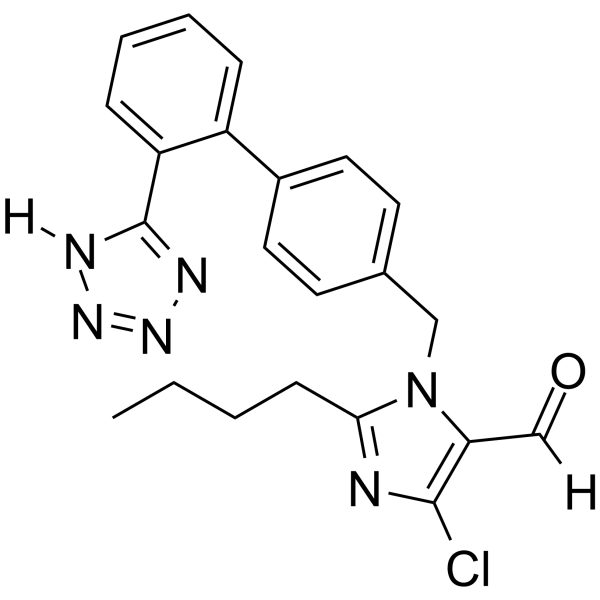 0 ImagesSynonyms: Losartan Carboxaldehyde; DuP 167
EXP3179 (Losartan Carboxaldehyde) is a metabolite of Losartan (HY-17512). EXP3179 binds to AT1R with an affinity of 20 nM and blocks ANGII-induced AT1R signaling, inhibiting ERK1/2 activation. EXP3179 reduces NADPH oxidase activity. EXP3179 inhibits Phenylephrine (HY-B0769)-induced aortic contraction through an endothelium-dependent, NO-dependent mechanism. EXP3179 dose-dependently inhibits type I collagen-induced platelet aggregation and activation through GPVI binding, reducing platelet adhesion to the injured site. EXP3179 lowers blood pressure in normotensive and spontaneously hypertensive rats and mice. EXP3179 can be used for research on type 2 diabetes, hypertensive heart disease, hypertension, thrombosis, and coronary artery disease.
-
Olmesartan medoxomil (Standard)
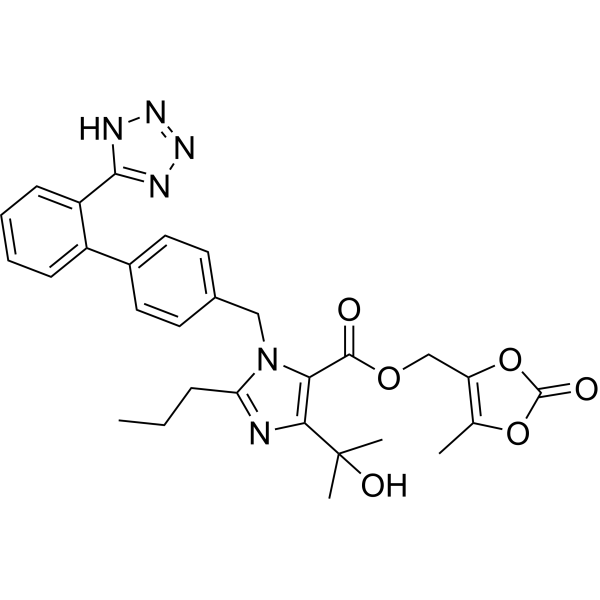 0 ImagesSynonyms: CS 866 (Standard)
Olmesartan medoxomil (Standard) is the analytical standard of Olmesartan medoxomil. This product is intended for research and analytical applications. Olmesartan medoxomil is a potent and selective angiotensin AT1 receptor inhibitor with IC50 of 66.2 μM.
-
Olmesartan medoxomil
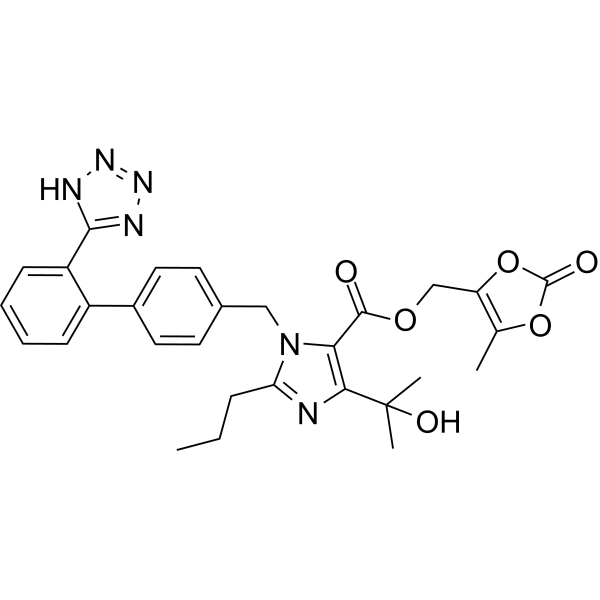 0 ImagesSynonyms: CS 866
Olmesartan medoxomil is a potent and selective angiotensin AT1 receptor inhibitor with IC50 of 66.2 μM.
-
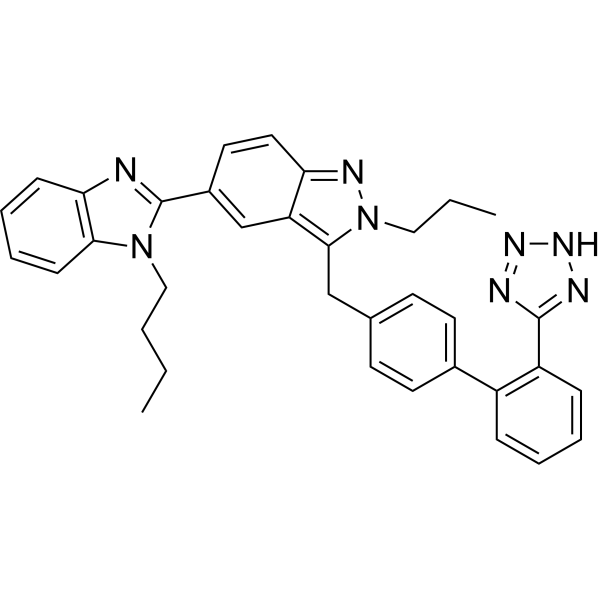
Diisononyl phthalate
 0 ImagesSynonyms: DINP
Diisononyl phthalate (DINP) is an orally active polyvinyl chloride plasticizer and indirect food additive. Diisononyl phthalate activates the ACE/AT1R axis and inhibits the production of NO. Diisononyl phthalate reduces the expression of eNOS. Diisononyl phthalate induces increased blood pressure in mice. Diisononyl phthalate induces monocytic leukemia in rats. Diisononyl phthalate can be used in hypertension-related research.
-
Olmesartan medoxomil-d6
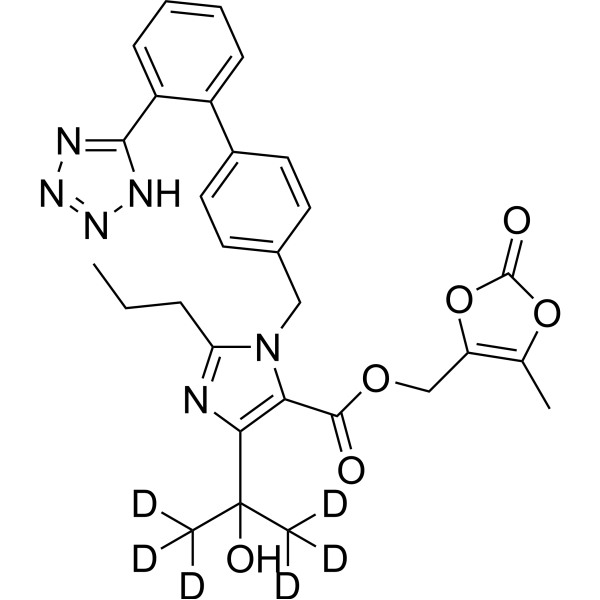 0 ImagesCat. No.: HY-17005SCAS No.: 1127298-67-2
Olmesartan medoxomil-d6 (CS 866-d6) is the deuterium labeled Olmesartan medoxomil. Olmesartan medoxomil is a potent and selective angiotensin AT1 receptor inhibitor with IC50 of 66.2 μM.
-
L-162537
 0 ImagesCat. No.: HY-108120CAS No.: 167027-99-8
L-162537 is a competitive human angiotensin II receptor 1 (AT1) and receptor 2 (AT2) antagonist with an IC50=1.7 nM for AT1. L-162537 inhibits Ang II-mediated vasoconstriction, blood pressure elevation and related pathological signaling pathways. L-162537 is promising for research of angiotensin II-related cardiovascular diseases such as hypertension.
-
EXP3179 (Standard)
 0 ImagesCat. No.: HY-114950RCAS No.: 114798-36-6Synonyms: Losartan Carboxaldehyde (Standard); DuP 167 (Standard)
EXP3179 (Standard) (Losartan Carboxaldehyde (Standard)) is the analytical standard of EXP3179 (HY-114950). This product is intended for research and analytical applications. EXP3179 is a metabolite of Losartan (HY-17512). EXP3179 binds to AT1R with an affinity of 20 nM and blocks ANGII-induced AT1R signaling, inhibiting ERK1/2 activation. EXP3179 reduces NADPH oxidase activity. EXP3179 inhibits Phenylephrine (HY-B0769)-induced aortic contraction through an endothelium-dependent, NO-dependent mechanism. EXP3179 dose-dependently inhibits type I collagen-induced platelet aggregation and activation through GPVI binding, reducing platelet adhesion to the injured site. EXP3179 lowers blood pressure in normotensive and spontaneously hypertensive rats and mice. EXP3179 can be used for research on type 2 diabetes, hypertensive heart disease, hypertension, thrombosis, and coronary artery disease.



